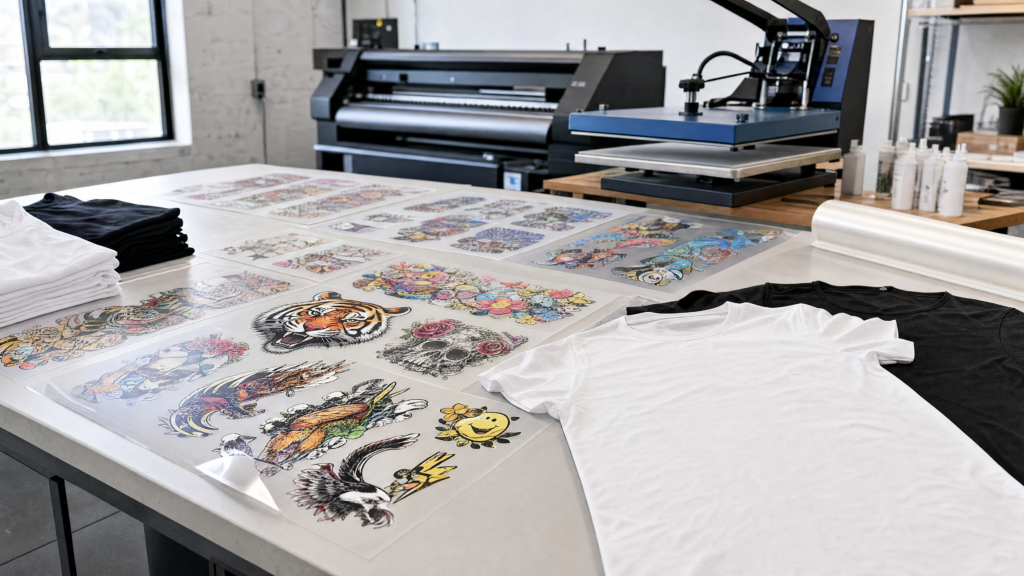
If you order transfers every week, you already know the difference between a decent print supplier and one that actually helps your business run smoother. The artwork has to be clean. The colors need to hold up. The film should press consistently. And when you are trying to fill customer orders, event shirts, retail drops, or team apparel, waiting around on transfers is not an option.
That is why more shops are looking at DTF transfers wholesale instead of trying to print everything in-house or ordering one-off designs at retail pricing. When the workflow is set up right, wholesale DTF printing gives you better control over cost, faster production, and more flexibility across different garment types.
At DTF ZOO, we work with people who are not just ordering one shirt for fun. They are building brands, running Etsy shops, pressing uniforms, handling school orders, selling at pop-ups, or taking repeat local business. Those customers do not need a lecture on what a heat press is. They need reliable transfers, easy gang sheet ordering, and straight answers about what works.
This guide breaks down how DTF transfers wholesale can help you order smarter, reduce waste, and keep your apparel business moving.
Why DTF Transfers Wholesale Are Growing
DTF has grown because it fits the way modern apparel businesses actually operate. Not every order is 500 pieces of the same design anymore. A clothing brand might run six designs in three sizes. A local print shop may need left-chest logos, sleeve prints, youth shirt graphics, and full-front designs all in the same week. A reseller might be testing new artwork before committing to larger inventory.
That kind of work is where DTF transfers wholesale make sense.
Screen printing is still great for certain jobs, especially large runs with simple colors. But setup time, minimums, and color limitations can make it less practical for mixed designs or smaller repeat orders. Vinyl can work for names and numbers, but it becomes slow when artwork gets detailed. Sublimation has its place too, but it is not ideal for every garment color or fabric.
DTF printing gives apparel sellers more breathing room. You can press detailed, full-color artwork onto cotton, blends, hoodies, tote bags, and more. You can order custom DTF transfers for several customers at once. You can keep popular logos on hand without stocking finished shirts in every size.
The bigger reason wholesale DTF printing keeps growing is simple: it helps businesses stay flexible.
A brand owner can release a small batch, see what sells, then reorder. A print shop can take on jobs without investing in a full DTF printer setup. A fundraiser organizer can order designs by size and press as needed. Less guessing. Less dead inventory. Less money tied up in blanks that may not move.
Benefits of Wholesale DTF Printing
The best thing about DTF transfers wholesale is not just the lower price per transfer. It is the way it changes your production workflow.
When you order in bulk, you can plan jobs instead of reacting to every single order like it is an emergency. You can group designs together. You can order repeat logos in quantity. You can build gang sheets that make better use of every inch of print space.
Here are the benefits most customers notice first:
- Lower cost per design when ordering multiple transfers
- Faster pressing compared with weeding vinyl
- Better flexibility for full-color artwork
- Easier repeat ordering for brands and teams
- Less need to hold finished garment inventory
- Cleaner workflow for print shops taking mixed orders
For example, say you run a small apparel brand and sell three shirt designs: one full-front graphic, one small chest logo, and one sleeve hit. Instead of ordering finished shirts in every size, you can order bulk DTF transfers, stock blank garments, and press based on actual demand.
That matters when you are testing designs. Maybe the black hoodie sells better than expected. Maybe the tan tee does not move. With DTF transfers wholesale, you are not stuck with a pile of finished shirts in sizes nobody wants.
For print shops, the benefit is just as practical. You may already do embroidery, vinyl, or screen printing, but DTF can fill the awkward jobs: low quantities, detailed logos, sponsor graphics, multi-color designs, or customer-supplied artwork that would be expensive to separate for screen printing.
Wholesale DTF printing gives you another tool without forcing you to become a full-time transfer manufacturer.
Why Gang Sheets Reduce Costs
Gang sheet printing is one of the easiest ways to save money when ordering transfers. Instead of ordering each image separately, you place multiple designs on one sheet. That lets you use the print area more efficiently and reduce wasted space.
If you have never planned gang sheets carefully, it is worth slowing down for a few minutes before you upload. The savings can be real, especially when you are ordering DTF transfers wholesale for multiple jobs.
A good gang sheet might include:
- Several left-chest logos
- Full-front designs in different sizes
- Sleeve prints
- Neck labels
- Reorder artwork for repeat customers
- Small add-on graphics for hats, bags, or kids’ shirts
The goal is simple: fill the sheet with work you actually need.
At DTF ZOO, customers can use the Upload Gang Sheet option if they already have a print-ready layout. That works well for designers, print shops, and brand owners who build their own sheets in design software.
If you want a more guided layout process, the Rolling Gang Sheet Builder is made for building longer sheets with multiple designs. A rolling gang sheet builder is especially helpful when you are ordering repeated logos, mixed sizes, or a week’s worth of customer jobs at once.
The biggest mistake people make with gang sheet printing is leaving too much empty space. Another common issue is placing designs too close together, which makes cutting harder. You want enough room to trim cleanly, but not so much that you are paying for blank film.
A practical approach is to group transfers by job or press size. If you have one customer with six shirt designs, keep those together. If you are ordering logos you press every week, line them up neatly so they are easy to cut and store. A clean gang sheet saves time later.
That is where DTF transfers wholesale and gang sheets work hand in hand. The more organized your artwork is, the better your pricing and production flow usually become.
How Clothing Brands Use DTF Transfers
DTF printing for clothing brands is not only about making shirts. It is about managing risk.
Most clothing brands do not start with unlimited money. Even established brands still have to make smart calls on inventory. You might know your audience, but you do not always know which colorway, size, or design will sell fastest.
With DTF transfers wholesale, brands can separate the artwork investment from the garment inventory. You can order premium DTF transfers in bulk, then press them onto blanks as orders come in. That gives you room to test without committing to finished stock too early.
Here are a few real-world ways clothing brands use custom DTF transfers:
Limited drops:
A brand can order transfers for a weekend release, press the first batch, and keep extra transfers ready if sales come in strong.
Pop-up events:
Instead of hauling every size and color already printed, you can bring blanks and press popular designs on demand.
Online stores:
Many brands keep transfers organized by design and size, then press after each order. That keeps shelves cleaner and reduces unsold inventory.
Retail restocks:
If a design sells out, reordering bulk DTF transfers is usually faster and simpler than rebuilding a full production job from scratch.
Private label work:
Some shops use DTF for neck labels, sleeve details, and small branding touches that make garments feel more finished.
For a clothing brand, the quality of the transfer matters. A cheap transfer that cracks, feels heavy, or presses inconsistently can hurt the customer experience. Premium DTF transfers should feel flexible, hold detail, and apply cleanly when pressed correctly.
That is why choosing the right supplier matters just as much as choosing the right blank shirt.
Choosing the Right DTF Transfer Supplier
Not every supplier handles DTF transfers wholesale the same way. Some are set up for hobby orders. Some are built around high-volume shop work. Some have good print quality but slow communication. Others ship fast but struggle with color consistency.
If you are ordering for a business, look at the full experience, not just the listed price.
A strong wholesale DTF printing supplier should offer:
- Clean print detail on small and large designs
- Consistent adhesive coverage
- Good stretch and wash performance
- Easy gang sheet ordering
- Clear artwork requirements
- Fair turnaround times
- Reliable shipping communication
- Support when something looks off
Price matters, of course. But the cheapest transfer is not always the cheapest by the time you factor in ruined blanks, repressing, customer complaints, or missed deadlines.
One thing I always recommend: test your main artwork before a big run. If you have a logo with tiny text, distressed texture, gradients, or thin lines, order a sample or small batch first. Press it on the type of garment you actually sell. Wash it. Stretch it. Look at it in daylight.
That little bit of testing can save a lot of frustration.
Also, pay attention to how the supplier wants files prepared. Transparent PNGs are common, but artwork quality still matters. If you are exporting from Canva, Canva has a helpful PNG tool and background guidance here: Canva PNG maker. For DTF, you generally want clean artwork with a transparent background unless the design intentionally includes a background shape.
For pressing, always follow the transfer supplier’s instructions first. If you need a general reference on heat press variables, SINGER has a basic temperature settings guide here: SINGER heat press temperature settings. Time, temperature, and pressure all matter. One setting being off can cause problems even when the transfer itself is good.
The right supplier should make ordering DTF transfers wholesale feel routine, not stressful.
Common Mistakes Buyers Make
Most DTF order problems start before the transfer is printed. The good news is that they are usually easy to avoid.
Uploading Low-Resolution Artwork
If your design looks fuzzy on screen, it will not magically become sharp on film. Low-resolution logos, screenshots, and compressed social media images are common troublemakers.
Use the cleanest file you can get. For custom DTF transfers, a transparent PNG at the correct size is usually a good starting point. Vector artwork is even better when available, but not every customer has it.
Forgetting to Remove the Background
This one happens all the time. A customer uploads a logo that looks like it has a transparent background, but the file actually has a white box behind it. On a white shirt, you may not notice. On a black hoodie, you definitely will.
Before you upload gang sheet artwork, open the file on a dark background and check the edges.
Making Text Too Small
DTF can hold nice detail, but there are still practical limits. Tiny text on a sleeve or neck label may look good on your monitor and then become hard to read once pressed onto fabric.
If the text matters, make it readable at the final print size.
Crowding the Gang Sheet
Gang sheet printing saves money, but do not make trimming miserable. Leave enough space between designs so you can cut without nicking the artwork.
This matters more when you are processing bulk DTF transfers. Cutting 20 designs is one thing. Cutting 200 tiny logos that are jammed together is a different kind of afternoon.
Ignoring Garment Compatibility
DTF is versatile, but your garment still matters. Heavy fleece, ribbed fabric, cheap polyester, and coated materials can all behave differently under heat. Test when you are working with a new blank.
Pressing Without Checking Pressure
A lot of people focus on temperature and forget pressure. Uneven pressure can cause lifting, poor adhesion, or inconsistent finish. If your press is old, uneven, or not closing squarely, that can show up in the final product.
Good DTF transfers wholesale ordering gets you halfway there. Good pressing finishes the job.
Why Fast Turnaround Matters
Fast DTF transfers are not just about impatience. In apparel, timing affects cash flow.
If you run a print shop, customers often come in with deadlines already attached: a tournament this weekend, a company event next Friday, a family reunion, a merch table, a school order, a rush restock. If your transfers arrive late, everything behind them gets squeezed.
For clothing brands, speed matters in a different way. When a design starts selling, you want to restock while people still care. Waiting too long can cost momentum. A quick transfer reorder can help you catch demand without overcommitting to finished inventory.
That is one reason DTF transfers wholesale work so well for repeat designs. Once your artwork is dialed in, reordering becomes much easier. You can keep your best sellers moving and use gang sheets to combine restocks with new designs.
Still, fast should not mean sloppy. A supplier has to balance turnaround with quality control. Transfers should be printed, powdered, cured, packed, and shipped correctly. When people say they want fast DTF transfers, what they really want is speed they can trust.
For most businesses, the sweet spot is a supplier that helps you plan ahead but can still move quickly when orders come in hot.
How to Build a Better Wholesale DTF Workflow
If you are ordering DTF transfers wholesale regularly, a little organization goes a long way. You do not need a complicated system. You just need a repeatable one.
Start by separating your artwork into folders:
- Customer name
- Design name
- Print size
- Date ordered
- Notes about garment or placement
Keep a simple reorder sheet with your best-selling designs and common sizes. If you use gang sheets, save the final gang sheet file too. That way, you are not rebuilding the same layout every time.
For shops handling multiple customers, label transfers as soon as they arrive. It sounds obvious, but once you have several similar logos cut apart on a table, the day gets longer fast.
A clean ordering workflow might look like this:
- Collect approved artwork.
- Confirm final print sizes.
- Build or upload gang sheet.
- Double-check transparent backgrounds.
- Place wholesale order.
- Label transfers by job when they arrive.
- Press a test garment when needed.
- Store extras flat and organized.
This is where tools like a DTF gang sheet builder can save time. Instead of manually guessing sheet length or spacing, you can build the order around the transfers you actually need.
The more often you order, the more this matters. Wholesale work rewards consistency.
FAQ: DTF Transfers Wholesale
What are DTF transfers wholesale?
DTF transfers wholesale are direct-to-film transfers ordered in larger quantities or through bulk pricing, usually for apparel brands, print shops, resellers, teams, and businesses that press transfers regularly. Instead of buying one small design at a time, customers order multiple transfers, gang sheets, or repeat designs to lower cost and improve workflow.
Are wholesale DTF transfers good for clothing brands?
Yes. DTF printing for clothing brands works well because it lets brands test designs, restock faster, and avoid holding too much finished inventory. You can order transfers in bulk, keep blank garments on hand, and press based on actual sales.
What is gang sheet printing?
Gang sheet printing means placing multiple designs on one transfer sheet. This helps reduce wasted space and can lower the cost per design. It is useful for logos, sleeve prints, full-front graphics, labels, and mixed customer orders.
Should I upload my own gang sheet or use a builder?
If you already know how to size and arrange artwork, you can use the Upload Gang Sheet option. If you want an easier way to arrange multiple designs, the Rolling Gang Sheet Builder is a better fit.
What file type should I use for custom DTF transfers?
A high-resolution transparent PNG is commonly used for custom DTF transfers. Make sure the background is actually transparent, the artwork is clean, and the design is sized correctly before uploading.
Do DTF transfers work on hoodies?
Yes, DTF transfers can work well on hoodies, including cotton and cotton-blend fleece. Use the correct press settings and enough pressure. Because hoodies have seams, pockets, and thicker fabric, placement and pressure matter.
How do I store bulk DTF transfers?
Store bulk DTF transfers flat, clean, dry, and away from heat or direct sunlight. Keep designs labeled by customer or job so they are easy to find later.
Are premium DTF transfers worth it?
For business orders, yes. Premium DTF transfers can reduce problems with pressing, washing, cracking, and customer returns. Saving a few cents on a transfer does not help if it costs you a blank shirt or a repeat customer.
Final CTA
If you are ordering transfers for real business use, your supplier should make the process easier, not add more guessing to your week. DTF ZOO is built for customers who need clean prints, practical ordering tools, gang sheet printing, and dependable turnaround.
Ready to order DTF transfers wholesale for your next run?
Start with the Upload Gang Sheet page if your file is already prepared, or build your layout with the Rolling Gang Sheet Builder. Get your designs organized, fill the sheet smart, and keep your press moving.
- Canva PNG export/background resource: Canva PNG Maker
- Heat press settings reference: SPEEDE HEAT PRESS