If you run an apparel printing business, you already know the small decisions are where the profit usually hides. A few inches of wasted film here, a slow reorder process there, too many one-off transfers, rushed artwork fixes, mis-sized designs, and suddenly a job that looked profitable feels tight.
That is exactly why custom dtf gang sheets have become such a practical tool for clothing brands, print shops, resellers, and side-hustle apparel sellers.
Instead of ordering every logo, left-chest print, sleeve hit, and full-back design as separate transfers, you place multiple graphics on one sheet. You use the available print area more efficiently, reduce waste, and keep production moving with transfers that are ready to press when orders come in.
Done well, custom dtf gang sheets can help you:
- Lower your cost per design
- Batch designs for faster fulfillment
- Test new products without overcommitting
- Print small runs with professional quality
- Organize repeat orders more easily
- Scale without buying your own DTF printer
For a growing shop, that flexibility matters. You can build a seasonal drop, restock your best sellers, prep for an event, or serve multiple customer jobs from one organized gang sheet. You are not locked into huge minimums or stuck holding boxes of finished shirts that may or may not sell.
This guide walks through how custom dtf gang sheets work, where they save money, what mistakes to avoid, and how to set up your files for clean, reliable results.
What Are Custom DTF Gang Sheets?
Custom dtf gang sheets are large DTF transfer sheets that contain multiple designs arranged together on one printable layout. Instead of printing each graphic as its own separate transfer, you “gang” several graphics together on the same sheet.
A single gang sheet might include:
- Left-chest logos
- Full-front shirt designs
- Full-back prints
- Sleeve graphics
- Neck labels
- Pocket-size artwork
- Hat or tote bag designs
- Multiple customer logos
- Repeated best-selling designs
Once the sheet is printed, each design can be cut apart and pressed individually.
DTF stands for direct to film printing. In DTF transfer printing, artwork is printed onto a specialty film using CMYK ink plus white ink. Adhesive powder is applied, the transfer is cured, and the finished design can be heat pressed onto fabric.
The big advantage is versatility. Custom DTF transfers work on a wide range of garments and fabric colors, including cotton, polyester, blends, dark shirts, light shirts, hoodies, tote bags, and more.
How a Gang Sheet Works
Think of a gang sheet like packing a suitcase. The goal is to fit what you need into the available space without damaging anything or making it hard to use later.
You choose a sheet size, upload your artwork, then arrange your designs so they fit cleanly. A good gang sheet builder lets you resize, duplicate, rotate, and position each graphic before ordering.
For example, one custom sheet could include:
| Design Type | Quantity | Use Case |
|---|---|---|
| 11-inch full-front logo | 6 | Standard adult t-shirts |
| 4-inch left-chest logo | 12 | Polos, hoodies, work shirts |
| 3-inch sleeve print | 20 | Add-on branding |
| Neck label | 30 | Private label apparel |
| Small promo graphic | 10 | Hats, bags, youth shirts |
That mix is where custom dtf gang sheets start to make sense. You are not paying for unused space, and you are not waiting on several separate transfer orders to complete one production run.
Gang Sheets vs Standard Sheets
A standard transfer order usually focuses on one design at one size. That works fine when you need a large quantity of the same graphic.
Gang sheets are better when you need variety.
For example, an apparel brand might need five sizes of the same design across adult, youth, and toddler garments. A print shop might need twenty small logos for different local businesses. A reseller might want to test ten new designs before deciding what to reorder in bulk.
In each case, custom dtf gang sheets give you more control over the layout and a better way to manage mixed production.
Why Apparel Brands Use Gang Sheets
Apparel businesses use gang sheets because they solve a very real production problem: variety is expensive when it is handled one piece at a time.
Modern apparel brands are not always printing 500 shirts with one design. Many are launching smaller drops, testing niche designs, creating custom orders, or offering personalized products. That means more artwork, more sizes, and more frequent changes.
Custom dtf gang sheets make that workflow easier.
They Help Brands Stay Flexible
A clothing brand might not know which design will sell best until customers respond. Ordering finished inventory too early can tie up cash in the wrong products.
With custom heat transfer sheets, you can keep transfers on hand and press garments as orders come in. This helps reduce dead stock and gives you room to test new ideas.
Instead of printing 100 finished shirts, you might order transfers for several designs, stock blank garments, and press only what sells.
That approach is useful for:
- Online apparel brands
- Event merch sellers
- School and team shops
- Local business uniform orders
- Print-on-demand style workflows
- Boutique brands with limited releases
They Make Small Runs More Practical
Small runs are often where margins get messy. Setup time, artwork prep, and handling can eat into profit quickly.
DTF gang sheets help because they let you combine multiple small jobs into one print order. If you have five customers who each need a handful of transfers, you can place them together on one sheet instead of treating every job like a separate production event.
That does not just save money. It also keeps the shop more organized.
They Support Faster Reorders
Once a layout is proven, you can reorder it again and again. That is especially useful for designs you know will keep selling.
A good approach is to build repeatable sheet templates:
- Best-seller restock sheets
- Logo pack sheets
- Youth-size sheets
- Event reorder sheets
- Private label sheets
- Seasonal design sheets
When a product sells through, you do not have to rebuild the whole job from scratch. You can update quantities, adjust the layout, and order again.
They Let Shops Offer More Without Owning More Equipment
Buying and maintaining a DTF printer is a serious commitment. It involves equipment cost, ink management, film, powder, curing, humidity control, maintenance, waste, and downtime.
For many apparel businesses, outsourcing custom DTF transfers is the cleaner path. You can offer high-quality direct to film printing without taking on the full production burden.
That is where a supplier like DTF Zoo becomes useful. The site is built around wholesale DTF transfers, gang sheet ordering, and fast production for businesses that want ready-to-press output without running the print room themselves.
How Gang Sheets Save Money
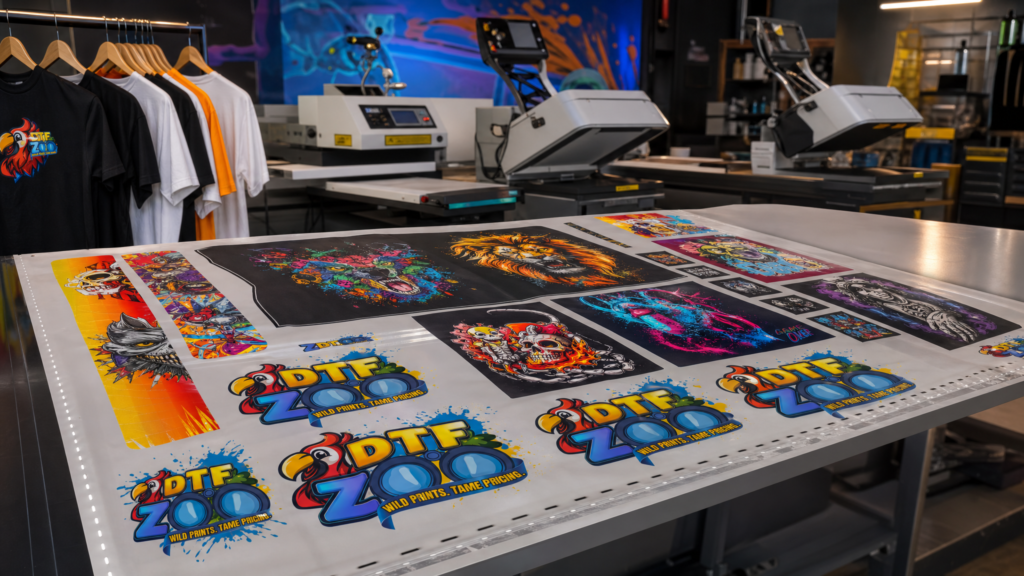
The biggest financial advantage of custom dtf gang sheets is simple: you get more usable transfers from the same print area.
When you order individual transfers, you may pay more for handling, spacing, setup, or unused material. With gang sheets, you control the layout and can use the sheet more efficiently.
You Reduce Wasted Film Space
Unused space is still space you paid for. If your artwork is scattered, oversized, or ordered separately, the waste adds up.
A gang sheet lets you fill open areas with smaller designs:
- Neck labels between large graphics
- Sleeve prints beside full-front designs
- Pocket logos in leftover gaps
- Repeated mini designs along sheet edges
- Youth graphics under adult-size prints
This is one of the easiest ways to lower your actual cost per transfer.
You Can Batch Orders Together
Batching is one of the most underrated habits in apparel production.
Instead of placing several small transfer orders throughout the week, you can collect jobs and build one organized gang sheet. That can help reduce shipping frequency, improve workflow, and make production easier to schedule.
For print shops, batching also helps separate artwork prep from pressing time. You can spend focused time building sheets, then focused time pressing garments once the transfers arrive.
You Can Take Advantage of Wholesale Pricing
Many suppliers price gang sheets by square footage. That means larger orders can become more cost-efficient.
DTF Zoo, for example, publishes wholesale pricing by square foot and notes that higher-volume orders receive better pricing tiers, with no minimum order listed on the site. You can view their current options through the DTF Zoo pricing and gang sheet pages.
For growing businesses, that model is helpful because you can start small and scale into bulk dtf transfers as your demand increases.
You Lower Risk When Testing Designs
A common mistake in apparel is overprinting too soon. A design looks great, the mockup gets good feedback, and then the brand orders too much inventory before actual demand is proven.
Custom dtf gang sheets let you test more designs with less commitment.
You might print:
- 5 transfers of Design A
- 10 transfers of Design B
- 3 transfers of a new colorway
- 12 transfers of a proven seller
- 20 neck labels for private branding
That mix gives you market feedback without forcing you into a large finished-garment run.
Cost-Saving Example
Here is a simplified example of how gang sheets can help.
| Ordering Method | What Happens | Business Impact |
|---|---|---|
| Individual transfers | Each design is ordered separately | Easier for simple jobs, but less efficient for variety |
| Poorly arranged gang sheet | Designs are placed with too much empty space | Better than separate orders, but still wasteful |
| Optimized gang sheet | Large and small designs are nested thoughtfully | Lower cost per usable transfer |
| Wholesale gang sheets | Multiple sheets ordered in volume | Better suited for scaling production |
The point is not to cram designs so tightly that cutting becomes annoying. The goal is a smart layout that saves space while staying practical on the production table.
DTF Gang Sheets vs Individual Transfers
Both options have a place. The right choice depends on the job.
Individual transfers are convenient when you need one design, one size, and a straightforward quantity. Custom dtf gang sheets are better when you need variety, flexibility, or better use of print space.
Comparison Table
| Feature | Custom DTF Gang Sheets | Individual Transfers |
|---|---|---|
| Best for | Multiple designs, sizes, and quantities | One design in one size |
| Cost efficiency | Usually stronger when layout is optimized | Can cost more for mixed jobs |
| Artwork control | High control over placement and sizing | Less layout work required |
| Cutting required | Yes, designs must be cut apart | Usually minimal |
| Reorder workflow | Great for repeat sheet templates | Simple for single-design reorders |
| Production flexibility | Excellent for brands and shops | Good for basic jobs |
| Waste reduction | Strong when using small gaps wisely | Depends on supplier layout |
| Scaling potential | Very good for bulk dtf transfers | Better for narrow use cases |
When Individual Transfers Make Sense
Individual transfers are still useful. If a customer needs 75 of the same full-front print, ordering that design as a single transfer size may be simple and efficient.
They also make sense when staff members need transfers pre-separated and ready to press without cutting.
When Custom DTF Gang Sheets Are Better
Custom dtf gang sheets are usually the better choice when you have mixed artwork or want to manage cost carefully.
They are especially useful for:
- New apparel drops
- Mixed-size logo packs
- Repeat customer jobs
- Local business uniforms
- School spirit wear
- Sleeve and neck label add-ons
- Event merchandise
- Boutique inventory
- Wholesale gang sheets
If your business handles variety, gang sheets are often the more practical format.
A Real-World Production View
In a busy shop, the best method is often a mix. Use individual transfers when the job is simple. Use custom dtf gang sheets when you need to organize multiple designs together.
That kind of judgment is what keeps production efficient. The goal is not to force every order into one format. The goal is to choose the format that protects your margin and keeps the job moving.
Common Artwork Mistakes
Good DTF printing starts before the file ever reaches the printer. Most production issues come from artwork problems that could have been caught early.
Custom dtf gang sheets give you a lot of control, but that also means your setup matters.
Low-Resolution Artwork
Low-resolution files are one of the most common problems. A design might look fine on a phone screen but print soft, fuzzy, or jagged at full size.
For clean results, artwork should be built at the final print size with enough resolution for sharp output. If you stretch a small web image to an 11-inch shirt print, the printer cannot invent detail that is not there.
Transparent Edges and Stray Pixels
Tiny leftover pixels can print as unexpected dots. This often happens when artwork is cut out from a background or exported quickly from design software.
Before uploading, inspect the file on a dark and light background. Check around the edges of letters, textures, distressing, and transparent areas.
A few stray pixels may not seem like much, but once they are printed with white ink underneath, they can become visible.
Artwork Too Close Together
It is tempting to pack a sheet as tightly as possible. Be careful.
If designs are too close, cutting becomes slow and risky. You may accidentally trim into a design or leave uneven edges. For production work, leave enough spacing to cut comfortably.
A slightly less crowded sheet is often better than one that saves half an inch but creates problems later.
Wrong Design Size
Sizing mistakes are expensive because the transfer may print beautifully but still be unusable.
Before building custom dtf gang sheets, decide where each design will be pressed.
Common size ranges include:
| Placement | Typical Size Range |
|---|---|
| Adult full front | 10 to 12 inches wide |
| Adult full back | 11 to 13 inches wide |
| Left chest | 3 to 4.5 inches wide |
| Sleeve print | 2.5 to 4 inches wide |
| Youth front | 7 to 9 inches wide |
| Toddler front | 5 to 7 inches wide |
| Neck label | 2 to 3 inches wide |
These are not hard rules. Garment style, artwork shape, and customer preference all matter. The key is to size intentionally.
Thin Lines and Tiny Text
DTF can hold impressive detail, but very thin lines and tiny text still have limits. Small script fonts, distressed textures, and fine outlines can become fragile or hard to read.
If a design includes very small details, review it at actual print size. If you cannot read the text clearly on screen at final size, it may not improve once printed.
Poor Color Expectations
Screens and printed transfers are different worlds. A phone screen emits light. A DTF transfer uses ink. Colors can shift depending on the file, garment color, fabric, press settings, and artwork style.
For brand-critical colors, it is smart to run a test before committing to a large batch.
Best File Setup for Printing
Clean file setup makes the entire job easier. It helps the supplier print accurately and helps you press with confidence when the transfers arrive.
Use Transparent Backgrounds
Most custom DTF transfers should be submitted with a transparent background unless the background is part of the design.
PNG files are common because they support transparency. Some workflows may also use PDF, TIFF, PSD, or vector files depending on the supplier’s requirements.
If you are using DTF Zoo’s Upload Gang Sheet option, send a print-ready layout. If you prefer to arrange designs online, their Rolling Gang Sheet Builder is designed for building a sheet directly in the browser.
Build at Final Size
Artwork should be sized exactly how you want it printed.
Do not rely on guessing later. If a left-chest logo should be 3.75 inches wide, set it that way. If a back print should be 12 inches wide, build it at 12 inches.
This matters even more when creating custom dtf gang sheets because one sheet may contain many different print sizes.
Keep Enough Space for Cutting
Leave practical spacing between designs. A clean gap makes cutting faster and reduces mistakes.
A good habit is to leave more space around complex shapes, text edges, and designs that will be cut in a hurry during production.
Check Orientation
Most designs should be placed upright for easy cutting and sorting. Rotation can help save space, but make sure the layout is still easy to understand.
If you rotate several designs to fit them into open areas, consider grouping similar items together so production staff can identify them quickly.
Name Files Clearly
File naming sounds boring until you are trying to reorder a sheet two months later.
Use names that tell you what the sheet contains:
- spring-drop-gang-sheet-01.png
- left-chest-logo-pack-may.png
- gym-client-reorder-sheet.png
- holiday-market-transfers-11×22.png
- neck-labels-black-shirts.png
Clear names help with reorders, customer service, and internal tracking.
File Setup Checklist
Before ordering custom dtf gang sheets, review this quick checklist:
- Artwork is high resolution
- Background is transparent where needed
- Designs are sized correctly
- Text is readable at final size
- Stray pixels have been removed
- Designs have enough cutting space
- Colors have been checked
- Sheet size matches your order
- File name is clear
- Quantity needs are confirmed
A few extra minutes here can save a lot of frustration later.
Heat Press Tips for Better Results
Even excellent transfers need proper pressing. Heat, pressure, time, garment surface, and peeling method all affect the final result.
Always follow the supplier’s instructions first. The guidance below is general production advice, not a replacement for the exact settings provided with your order.
Start With a Consistent Press
A quality heat press makes a noticeable difference. Uneven pressure or inaccurate temperature can cause lifting, dull areas, poor adhesion, or inconsistent wash durability.
Before pressing customer orders, make sure your press is reaching the temperature it says it is. Many shops use a heat gun or test strips to confirm platen accuracy.
Pre-Press the Garment
A short pre-press helps remove moisture and wrinkles. It also flattens the print area so the transfer makes better contact with the fabric.
This is especially useful for hoodies, thicker cotton shirts, and garments stored in humid conditions.
Use Firm, Even Pressure
DTF transfers generally need firm pressure. Too little pressure can prevent the adhesive from bonding properly. Too much pressure can affect texture or cause press marks on sensitive garments.
The goal is even contact across the full design.
If you are pressing over seams, zippers, collars, or pockets, use a pressing pillow or pad to raise the print area and avoid uneven pressure.
Watch Your Placement
Production speed matters, but crooked prints are costly. Use alignment tools when needed, especially for repeat jobs.
Common placement habits include:
- Fold the shirt lightly to find center
- Use a T-square or placement ruler
- Mark common placements on your press
- Keep left-chest logos consistent
- Check hoodie pockets before pressing
Small improvements in placement consistency make finished products look more professional.
Peel Correctly
Some DTF transfers are hot peel, some are warm peel, and some are cold peel. Follow the supplier’s instructions.
Peeling too early or too aggressively can affect the finish. If a corner lifts, stop and repress instead of pulling the entire film away.
Consider a Finishing Press
Many shops use a short second press after peeling. This can help improve feel and finish. A cover sheet, parchment paper, or finishing sheet may be used depending on the transfer and garment.
Again, follow the supplier’s recommended settings.
Test Before a Large Run
If you are working with a new garment, new artwork style, or new transfer supplier, test first.
Press one item, wash it, stretch it lightly, and inspect the finish. That small test can protect a much larger order.
Choosing the Right DTF Supplier
The supplier you choose affects more than print quality. It affects turnaround time, customer satisfaction, cash flow, and how confidently you can sell.
Custom dtf gang sheets are only as useful as the production behind them.
Look for Consistent Print Quality
A good DTF supplier should produce transfers with:
- Clean edges
- Strong opacity
- Vibrant color
- Good stretch
- Smooth adhesive coverage
- Reliable wash performance
- Consistent results from order to order
Consistency matters more than one impressive sample. Your customers expect the reorder to match the first order.
Make Sure Ordering Is Easy
A good ordering process saves time. Look for a supplier with a clear gang sheet builder, easy upload options, transparent pricing, and simple checkout.
DTF Zoo offers both a Build a Gang Sheet option and an Upload Gang Sheet option, which is useful because different customers work in different ways.
If you already have print-ready files, upload them. If you need to arrange artwork online, use the builder.
Check Turnaround Time
Fast production helps you say yes to more jobs. It also keeps your inventory lean because you do not need to over-order as much.
DTF Zoo lists 1-2 day production on its site, along with nationwide shipping across the United States. For apparel sellers working around launches, events, and customer deadlines, that speed can make a real difference.
Understand Pricing
Transparent pricing helps you quote jobs accurately. If you do not know your transfer cost, you cannot confidently price your finished apparel.
When comparing options, look at:
- Price per square foot
- Volume discounts
- Minimum order requirements
- Shipping costs
- File setup expectations
- Reprint policies
- Turnaround time
- Support quality
Wholesale gang sheets are especially helpful when the pricing rewards larger sheet volume without forcing you into unnecessary commitments.
Look for Business-Friendly Options
If you are scaling an apparel printing business, you need more than pretty prints. You need a supplier that understands production.
Helpful features include:
- No minimums
- Bulk dtf transfers
- Ready to press gang sheets
- Easy reorder workflows
- Clear artwork guidelines
- Fast support
- Reliable shipping
- Custom DTF transfers for mixed garment types
The right supplier should make your operation feel smoother, not more complicated.
CTA: Build Smarter Sheets Before Your Next Drop
Before your next apparel release, take a few minutes to plan your transfers by product type, size, and expected demand.
If you already have print-ready artwork, use DTF Zoo’s Upload Gang Sheet page. If you want to arrange your designs online, try the Rolling Gang Sheet Builder.
Custom dtf gang sheets are at their best when the layout matches how you actually produce orders.
Practical Ways to Use Custom DTF Gang Sheets
Once you understand the basics, the real value comes from how you use them in your business.
Launch Sheets
Create one gang sheet for each apparel drop. Include your main designs, alternate sizes, sleeve prints, and neck labels.
This keeps the whole release organized in one place.
Reorder Sheets
When a design becomes a consistent seller, build a dedicated reorder sheet. Fill it with your most common sizes and placements.
This is one of the easiest ways to turn custom dtf gang sheets into a repeatable system.
Client Logo Sheets
For local businesses, create a logo pack with left-chest prints, sleeve marks, and full-back graphics. This works well for contractors, gyms, restaurants, schools, and event staff.
Label and Branding Sheets
Neck labels, hem tags, and small brand marks are perfect for leftover space. Adding these to your gang sheet can make your finished apparel feel more polished without creating a separate order.
Market and Event Sheets
If you sell at pop-ups, festivals, or local markets, gang sheets let you prep transfers before the event and press best sellers as needed.
This can reduce the number of finished garments you need to carry.
Sample Sheets
Testing new artwork? Build a sample sheet with small quantities of multiple designs. Press them, photograph them, post them, and see what gets attention.
That is a cleaner way to test demand than guessing.
FAQs
What are custom dtf gang sheets?
Custom dtf gang sheets are DTF transfer sheets that include multiple designs arranged on one layout. After printing, each design is cut apart and heat pressed onto garments or other compatible items.
They are commonly used by apparel brands, print shops, and resellers that need several designs, sizes, or placements in one order.
Are DTF gang sheets good for small apparel brands?
Yes. DTF gang sheets are especially useful for small brands because they allow you to test designs, print smaller quantities, and avoid overstocking finished garments.
You can order transfers first, keep blank apparel on hand, and press products as customers buy them.
How do custom dtf gang sheets save money?
Custom dtf gang sheets save money by helping you use more of the printable sheet area. Instead of paying for separate transfers with unused space, you can combine large and small designs into one efficient layout.
They can also support batching, easier reorders, and better use of wholesale gang sheets.
What is the difference between gang sheets and individual transfers?
Gang sheets contain multiple designs on one sheet. Individual transfers are usually printed as separate pieces with one design per transfer.
Individual transfers are convenient for simple jobs. Custom dtf gang sheets are better for mixed artwork, multiple sizes, and cost-conscious production.
Do I need design software to make a gang sheet?
Not always. If you already use design software, you can create your own print-ready layout and upload it. If not, a gang sheet builder lets you arrange designs online.
DTF Zoo offers a browser-based builder for customers who want to create a layout without advanced design software.
What file type should I use for custom DTF transfers?
PNG with a transparent background is commonly used, but accepted file types depend on the supplier. The most important things are clean transparency, high resolution, correct sizing, and no unwanted background.
Always check the supplier’s upload requirements before ordering.
How close can I place designs on a gang sheet?
Leave enough space to cut between designs comfortably. Overpacking the sheet can slow production and increase the chance of cutting into artwork.
For a professional workflow, balance space savings with practical handling.
Can I use custom dtf gang sheets for hoodies?
Yes. DTF transfers work well on many hoodies, sweatshirts, and fleece garments. You may need to adjust pressure, use a pressing pillow, and pay attention to seams, pockets, and thicker fabric.
Always test first when working with a new garment style.
Are ready to press gang sheets already cured?
Yes, ready to press gang sheets should arrive printed, powdered, cured, and prepared for heat application. You still need to cut the designs apart and follow the supplier’s pressing instructions.
Can I order bulk DTF transfers with gang sheets?
Yes. Bulk dtf transfers are often ordered as gang sheets because the format helps maximize space and control cost. This is a practical option for brands, print shops, and resellers with ongoing volume.
Do custom dtf gang sheets work on dark shirts?
Yes. DTF printing uses white ink under the color layer, which helps designs show on dark garments. File quality, print quality, and pressing technique still matter.
Should I use gang sheets for neck labels?
Yes. Neck labels are a smart use of extra space on custom dtf gang sheets. They are small, easy to place between larger graphics, and can make your apparel feel more branded.
How should I store DTF transfers before pressing?
Store transfers flat or gently rolled, away from heat, moisture, dust, and direct sunlight. Keep them in a clean environment and avoid bending or scratching the printed area.
How do I know what size to make my designs?
Start with the garment type and placement. Adult full-front prints are often around 10 to 12 inches wide, while left-chest logos are often around 3 to 4.5 inches wide.
For more confidence, use a sizing guide, measure sample garments, and press test pieces before running a full order.
When should I reorder custom dtf gang sheets?
Reorder when you see consistent demand or when your remaining transfers no longer cover upcoming orders. Many shops reorder before they run out so they are not forced into rushed production.
Conclusion
Custom dtf gang sheets are one of the most practical ways to reduce waste, control costs, and scale an apparel business without making production more complicated.
They give you room to test new designs, organize repeat orders, serve mixed customer jobs, and keep ready-to-press transfers on hand. For brands and shops that handle variety, that flexibility can protect margins and speed up fulfillment.
The best results come from thoughtful setup: clean artwork, correct sizing, smart spacing, reliable pressing, and a supplier that can deliver consistent quality.
If you are planning a new drop, restocking best sellers, or building a more efficient transfer workflow, custom dtf gang sheets are worth making part of your process. Start with a clean layout, use every inch wisely, and build sheets around how your business actually sells and produces apparel.